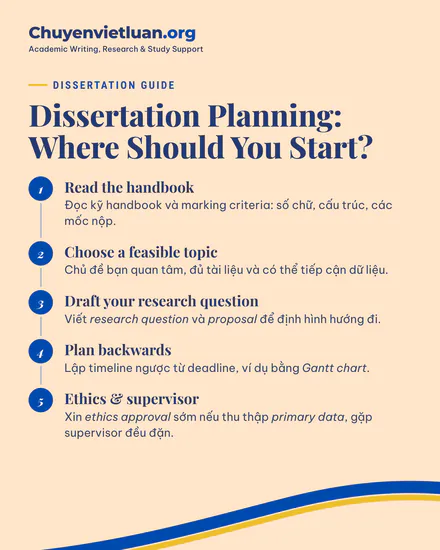
Dissertation Guide
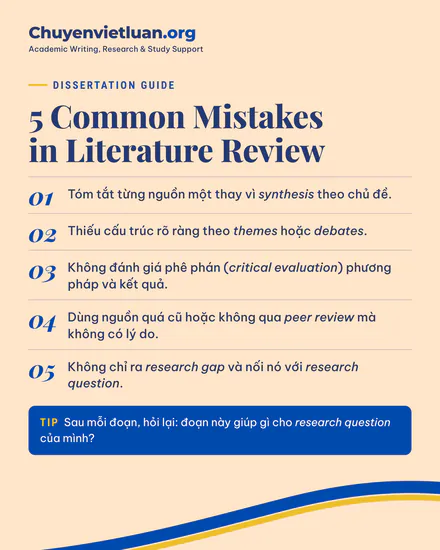
5 Common Mistakes in Literature Review
The five faults that draw the most criticism, starting with summarising one source at a time instead of synthesising by theme.
Academic Writing · Research · Study Support
We work alongside university and postgraduate students: read the brief and the rubric properly, rebuild the structure, develop the research skills, then finish the work that is yours with a clear direction behind it.

Where you are
Not everybody needs the same thing. Whichever box sounds like you, that is where we start.
You have the brief in front of you, you have read it twice, and you still cannot tell what they actually want or which part to write first.
Read the brief and rubric together → 02You have written a fair amount, but the sections sit apart from each other, ideas repeat, and no single argument runs through any of it.
Rebuild the outline against the rubric → 03The research question is not settled, you are unsure whether to go qualitative or quantitative, or you have the data and no idea what to run on it.
Research methods and analysis → 04It is nearly finished and you are not confident: is the argument deep enough, is the referencing right, where are you losing marks for no reason.
A last pass before you submit →None of these quite fit? Describe it in your own words and we will tell you what to tackle first.
About us
The three hold each other up. Most work loses marks not because the writing is poor, but because one of the three below was never settled.
Direction on assignments, essays, dissertations, proposals and literature reviews. From reading the brief, to building an outline against the rubric, to writing so the argument actually holds.
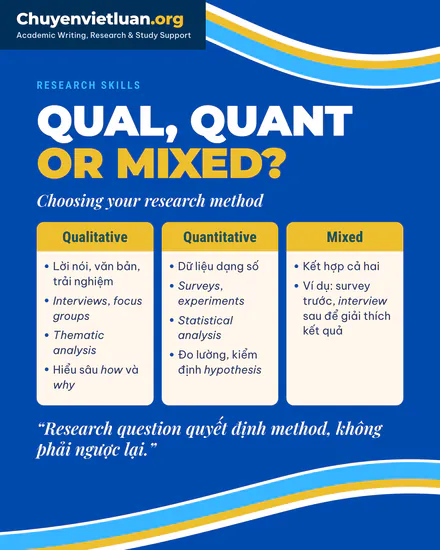
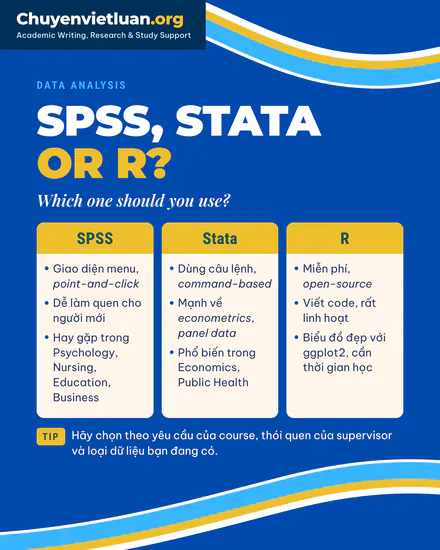
Research methods, research questions, and data analysis in SPSS, Stata, R, NVivo and Excel. The question picks the method, not habit or whatever was used last time.
Referencing in APA 7, Harvard and MLA, plus managing workload and deadlines. Nobody teaches this part, and it affects both your grade and how the term feels.
You are the writer. We walk alongside you so the work goes in the right direction.
Our support process
Always in this order. Skipping the first step and going straight to writing is the single most common reason a draft has to be started again.
Get the academic requirements straight: the brief, the rubric and the marking criteria. We read them with you and turn the vague criteria lines into specific things the work has to do.
Build the research skills, from the research question and the methods through to finding and judging sources. This is the part you keep for the units that come after, not just for this piece.
Finish your own work with a clear direction behind it: structure, argument, referencing. Every round comes back with the fixes in order, so you always know which one moves the grade most.
Why work with us
Six things you get, and six things we hold ourselves to.
We read the marking criteria for your unit, not a generic template. The work should read as though it came out of your course, because it did.
Most of the trouble is structural, not verbal. Settle the shape and the writing goes much faster, with far less thrown away.
We do not stop at producing the output tables. You understand why that test was chosen and can say what the result means out loud.
We tell you at the start what the remaining time allows. Better to say so up front than to apologise at the deadline.
Your brief, your drafts and your details are never shared, published or used as an example for anyone else.
Every round explains why a change was made. Next unit you do that part yourself, which is the whole point.
Topics
Everything we publish falls into these seven. Start with whichever one is giving you trouble right now.
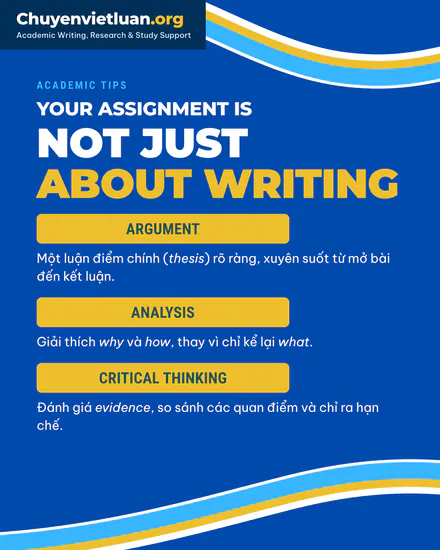
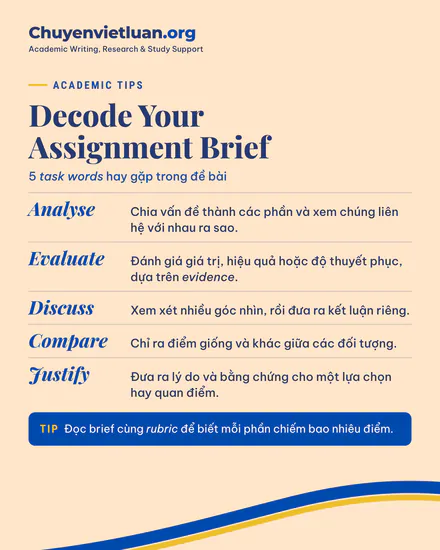
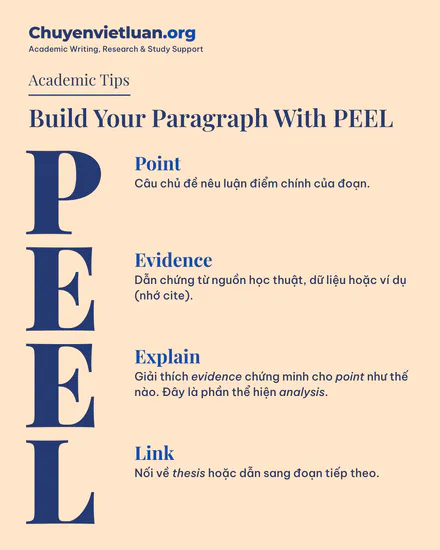
Working on assignments and essays: decoding the brief, building an argument, critical analysis, writing paragraphs with PEEL.
02Thesis, proposal and literature review: where to begin, how to structure it, and the criticisms that come up most often.
03Research questions, research methods, finding credible sources and recognising a genuine research gap.
04SPSS, Stata, R, NVivo and Excel: which tool to pick, how to clean the data, and how to read the output properly.
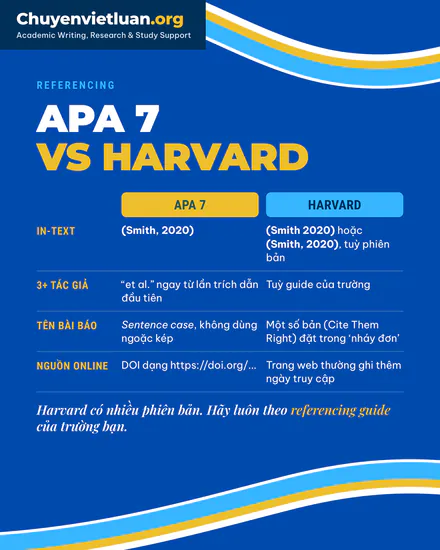
05APA 7, Harvard and MLA: where they differ, when to quote or paraphrase, and the mistakes that cost easy marks.
06Mistakes specific to a format: business reports, reflective writing, finance and accounting assignments.
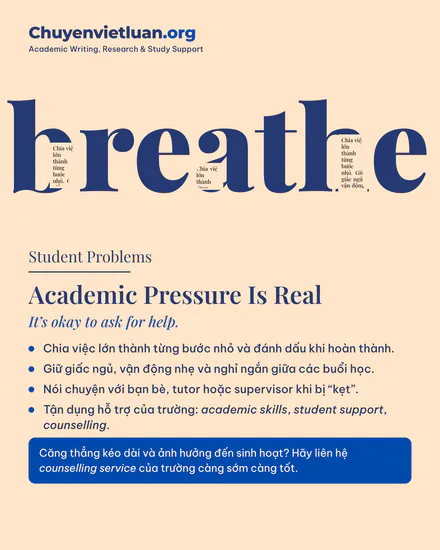
07Deadlines stacking up, workload beyond what fits in a week, academic pressure, and how to lay it out so it is manageable.
Software & standards
Not every piece needs all of these. But when yours touches one of them, you are not working it out alone.
Data analysis
Visualisation
Referencing
Methods
What we see most
Tutor feedback is usually very short. Here is how to turn each line into something specific you can fix this week.
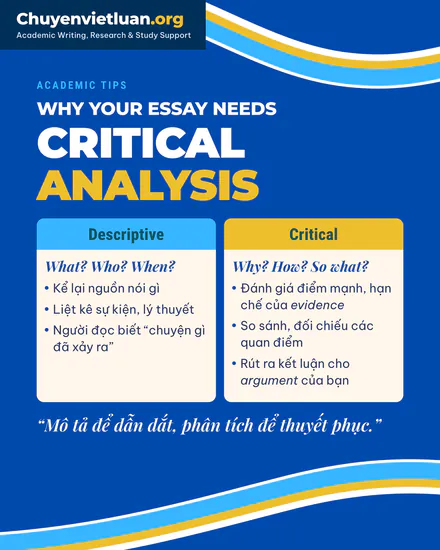
The work is retelling what the sources say instead of judging them. Add the why and the how: where this study is strong, where it is weak, and whether it supports or undercuts your point.
The reader cannot find one claim running the whole way through. Try writing that claim as a single sentence. If you cannot, the piece has no argument yet, which is different from writing badly.
Each paragraph stops at the what. Add the so what: what follows from it, and why it matters to your research question.
You are summarising one author at a time. Group by theme or by disagreement, let the sources argue with each other, and close on the gap your work fills.
The method was chosen because it was convenient. Every choice needs to tie back to the research question, and you need to say plainly what the method cannot show you.
The results chapter is standing on its own. Put each finding next to a study from chapter two: the same, different, and the reason for the gap.
There are two or three citation habits in one document. Pick one style from your department handbook and run it from the first citation to the last entry.
Good work, wrong target. Keep the research question at the top of the page while you write. Any paragraph that does not move towards the answer can go.
Read first
Six out of the thirty in the library. All free, and nothing to sign up for.
Dissertation Guide
The five faults that draw the most criticism, starting with summarising one source at a time instead of synthesising by theme.
Research Skills
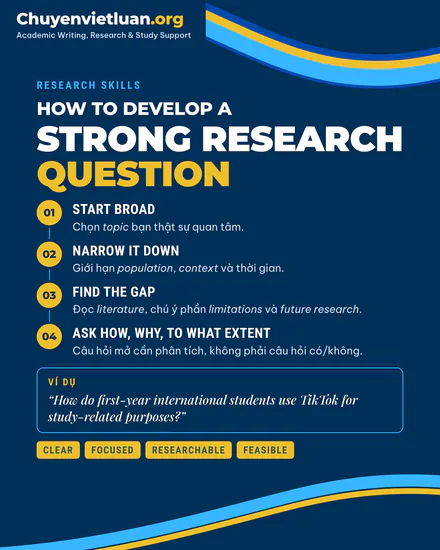
A good research question is narrow enough to answer and broad enough to be worth answering. How to narrow one down from a topic.
Data Analysis
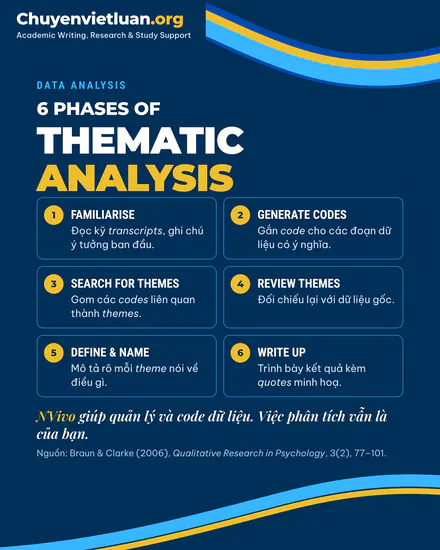
The six phases from Braun and Clarke, and why the first and the last are the ones most often skipped.
Dissertation Guide
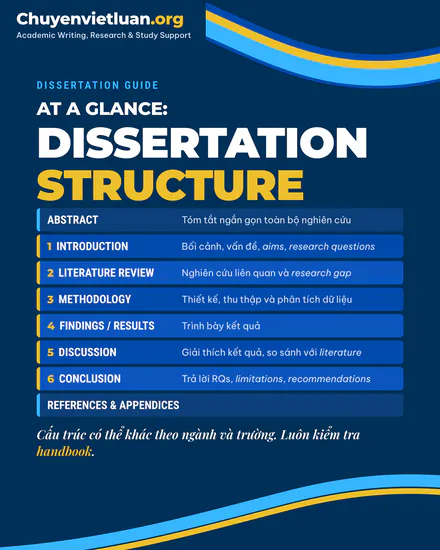
What each chapter has to do and roughly what share of the word count it gets, laid out on a single page.
Data Analysis
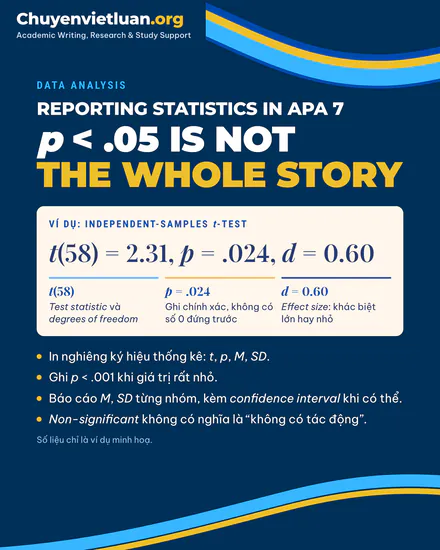
Statistical significance is not the same as practical significance. Why effect size and confidence intervals belong in the report.
Referencing
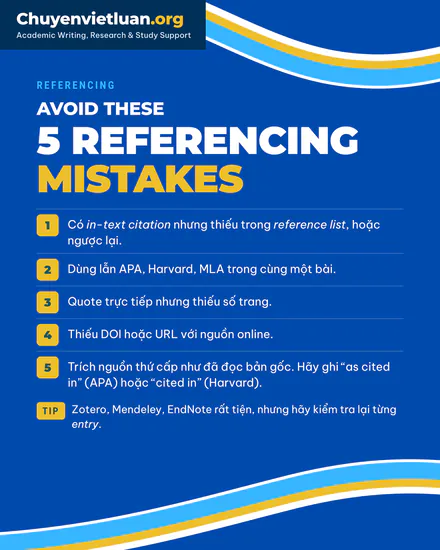
The five that come up most, from entries missing in the reference list to secondary citations passed off as primary.
Quick answers
Short answers here. The full twelve are on the FAQ page.
See all twelve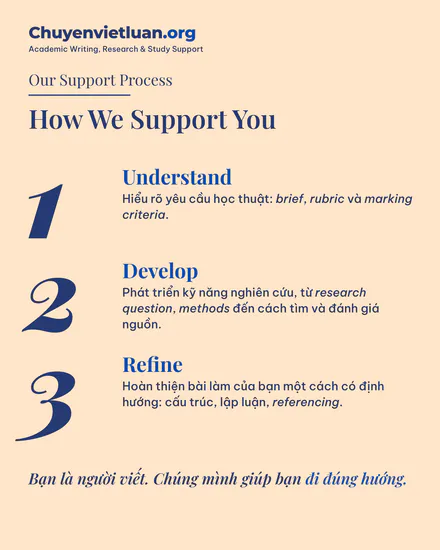
No. You are the writer. We help you understand the requirements and keep the work pointed in the right direction.
As early as you can. Fixing the structure before you write costs almost nothing. Fixing it afterwards means throwing a lot away.
Yes. Your brief, drafts and data are never shared with anyone and never used as an example.
We pick a test that fits the research question, run it with you, then help you put the result into words.
Ask anyway. We will say plainly what fits in the time and what does not, and you decide.
By the scope you actually need, quoted once with nothing added later. Send the brief for a figure.
Get started
Nothing to prepare. Send whatever you already have and we will read it, then tell you what to fix first and what can wait.
These two files say more about how your work is marked than anything else.
How much time is left decides the plan, so tell us early rather than late.
Half an outline is more useful to work from than a blank page.
Comments like “lack of critical analysis” all translate into specific edits.
Contact
Chuyenvietluan.org
Academic Writing, Research & Study Support
Facebookfb.com/Chuyenvietluan.org MessengerMessage us directly, answered same day Message usYou are the writer. We walk alongside you so the work goes in the right direction.